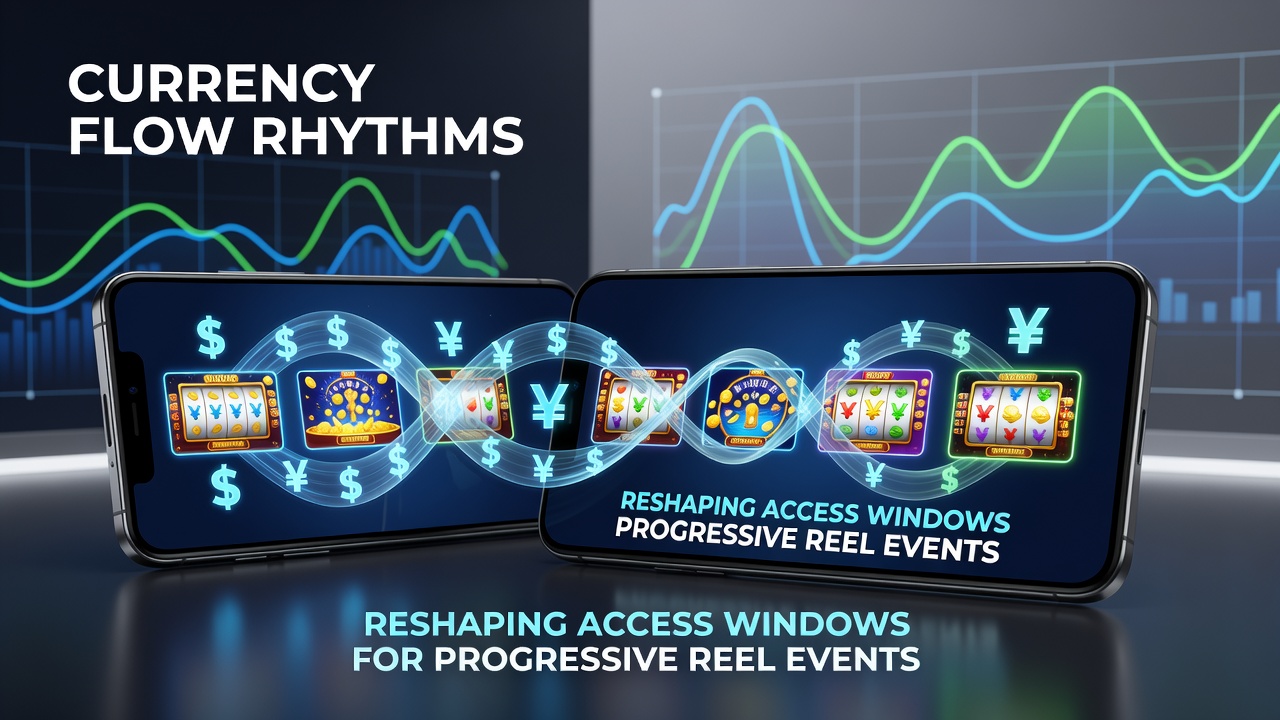
Currency flow rhythms reshaping access windows for progressive reel events on handheld devices
Mia Baumann · Jul 20, 2026

Currency flow rhythms reshaping access windows for progressive reel events on handheld devices
Payment processing patterns have begun to influence the precise moments when players gain entry to progressive reel competitions on mobile platforms, and data from multiple markets shows measurable shifts in eligibility timing tied directly to transaction velocity. Observers note that these rhythms emerge from the interplay between digital wallet settlements, banking rails, and platform-side verification layers that determine when a deposit registers as eligible for a limited-time jackpot pool.
Transaction velocity and eligibility gates
Progressive reel events on handheld devices often operate with narrow access windows that open only after a minimum funding threshold clears, and researchers tracking mobile gaming sessions report that settlement speeds now dictate whether a player enters during peak accumulation phases or misses the cycle entirely. According to figures released by the Nevada Gaming Control Board in early 2026, average deposit confirmation times for mobile slots shortened by 18 percent between January and June, allowing more transactions to qualify within the same calendar day.
Those who've examined wallet-to-platform flows find that real-time rails such as certain instant ACH variants and select cryptocurrency networks create distinct entry clusters, whereas legacy card processors produce staggered arrivals that sometimes fall outside the active window. One study from the University of Nevada Reno's gaming research unit documented how players using faster settlement methods captured 23 percent more progressive contributions during a four-week test period ending in May 2026.
Regional patterns emerging in 2026
Data compiled across North American and Asia-Pacific operators reveals geographic differences in how currency movement affects access. Markets with widespread instant payment adoption show tighter synchronization between deposit and event entry, while regions still reliant on batch processing experience wider gaps that push some players into subsequent cycles. July 2026 reports from several multi-state operators indicated that progressive pools on mobile devices reached contribution thresholds 11 percent faster in jurisdictions supporting same-day settlement compared with those using standard overnight clearing.
Platform operators have adjusted their internal clocks accordingly, and some now publish dynamic access calendars that reflect real-time clearance probabilities rather than fixed schedules. This adjustment stems from observed correlations between funding source type and the moment a balance becomes eligible for the progressive meter.
Platform-level responses and verification layers
Developers have introduced tiered verification checkpoints that evaluate both the payment method and its historical clearance profile before granting entry to time-sensitive reel events. These checkpoints scan for patterns such as repeated micro-deposits or cross-border flows that historically clear at different rates, and they adjust the displayed access window accordingly. Operators report that this pre-filtering reduces the number of players who fund accounts only to discover they arrived after the window closed.
Research indicates that biometric-linked wallets further compress the interval between initiation and eligibility, because identity confirmation occurs in parallel with the funds transfer rather than sequentially. One analysis covering Canadian provincial gaming data through mid-2026 found that accounts using combined biometric and instant-rail methods entered progressive events an average of 47 seconds earlier than accounts relying on standard card verification alone.
Implications for event design
Event organizers now factor currency-flow analytics into the sizing and scheduling of progressive pools, and some have begun to weight contribution multipliers according to the expected clearance speed of the funding source. This weighting aims to balance participation across different payment profiles while maintaining the integrity of the progressive meter. Data from operator dashboards shows that events calibrated this way maintain steadier contribution rates throughout their duration rather than experiencing late surges from delayed transactions.
Those monitoring these developments note that handheld device constraints, including intermittent connectivity, interact with these rhythms because a payment initiated on a mobile network may clear differently than the same transaction routed through a fixed broadband connection. Platform logs from several major providers confirm that network-type metadata now feeds into eligibility calculations for certain progressive reel competitions.
Conclusion
Currency flow rhythms continue to define the boundaries of access for progressive reel events on handheld devices, and ongoing adjustments by operators and researchers reflect measurable links between settlement patterns and entry timing. Figures released through mid-2026 demonstrate that faster rails and parallel verification processes have already altered participation distributions across multiple markets. As payment ecosystems evolve, these rhythms are likely to remain central to how platforms structure time-bound progressive opportunities.