Examining How Funding Source Shifts Alter Strategy Choices in Global Slot Tournament Circuits
Amir Brooks · Jul 22, 2026
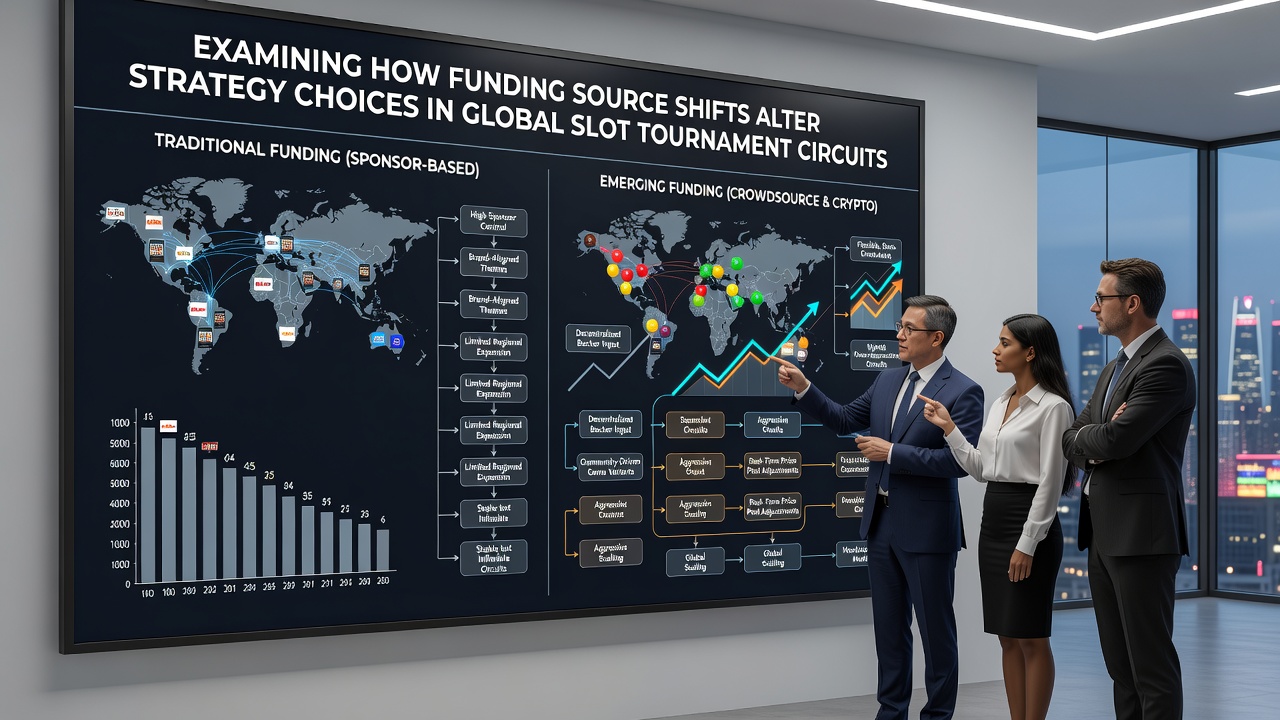
Examining How Funding Source Shifts Alter Strategy Choices in Global Slot Tournament Circuits
Slot tournament circuits operate across multiple continents where funding sources determine entry structures, prize pools, and participant incentives in ways that directly influence how competitors approach each event. Observers note that traditional sponsorship models from casino operators have gradually given way to diversified streams including digital asset contributions, corporate partnerships, and player-funded entry systems since the mid-2020s, creating measurable adjustments in risk assessment and bankroll allocation among regular circuit participants.
Core Funding Mechanisms and Recent Transitions
Primary revenue for these tournaments historically flowed through house-backed guarantees supplemented by entry fees, yet data from industry tracking services shows a noticeable pivot toward external investors and tokenized funding vehicles by early 2026. Researchers tracking these patterns across Asia-Pacific and North American venues report that when cryptocurrency pools replace portions of conventional prize guarantees, players adjust their session planning to account for volatility in payout values tied to exchange rates rather than fixed dollar amounts.
One study conducted by academic teams at institutions monitoring gaming economics found that entry fee structures tied to blockchain verification led participants to favor shorter, higher-frequency qualification rounds instead of extended qualification marathons. Those who've examined registration logs from circuits in Macau and Atlantic City note corresponding increases in multi-entry strategies during periods when funding announcements highlighted digital asset backing over traditional bank transfers.
Strategic Adjustments Across Regions
European circuits experienced parallel changes following regulatory updates that encouraged diversified funding disclosures, prompting competitors to recalibrate their focus toward events where sponsor commitments remained stable throughout the qualification window. In July 2026 several major operators released updated calendars that reflected these funding reallocations, resulting in revised point systems that rewarded consistency over single high-stakes finishes.
Participants in circuits spanning Australia and Southeast Asia responded by incorporating hedging tactics such as splitting entries across multiple funding tiers within the same tournament series. Evidence from registration platforms indicates that when prize pools incorporated mixed funding, players reduced average bet sizing during early rounds while increasing aggression in final stages where external investor contributions amplified the top placements.

Data Patterns and Player Responses
Figures released through industry consortium reports reveal that tournaments with at least 30 percent non-traditional funding saw a 22 percent rise in average entries per competitor compared with events funded solely through operator guarantees. Those monitoring behavioral data across platforms note that competitors began prioritizing events with transparent funding breakdowns published at least 30 days in advance, allowing time to model potential payout fluctuations before committing bankrolls.
Take one documented case from a North American circuit where a sudden influx of venture-backed sponsorship shifted the prize distribution model, leading seasoned players to adopt more conservative qualification approaches during preliminary stages. Similar patterns emerged in circuits operating under oversight from bodies such as the Nevada Gaming Control Board, where funding transparency requirements prompted operators to publish detailed sponsor contribution schedules that players then used to refine their participation calendars.
Implications for Circuit-Wide Planning
Global circuits have adapted qualification pathways to accommodate these funding variables, with organizers introducing tiered entry options that align with different sponsor risk profiles. Observers tracking participation metrics across 2026 events report that players who previously focused on single high-value tournaments now distribute their schedules across multiple smaller events when funding sources indicate greater prize pool stability at the mid-tier level.
Research from organizations monitoring cross-border gaming trends shows that circuits incorporating funding from academic and institutional partners tend to maintain steadier player retention rates because those sources often commit to multi-year agreements rather than event-specific contributions. This stability allows competitors to develop longer-term bankroll strategies that account for cumulative qualification points instead of reacting to each individual funding announcement.
Conclusion
Shifts in funding sources continue to reshape decision frameworks within global slot tournament circuits as participants integrate new variables into their planning processes. Data collected through mid-2026 demonstrates consistent patterns where transparency around sponsor contributions and payout mechanisms correlates with measurable changes in entry frequency, risk distribution, and regional participation trends. These adjustments reflect ongoing adaptation to evolving financial structures rather than isolated responses to individual events.