How Authentication Timelines Shape Entry Windows for Portable Progressive Events
Rafael Otto · Jun 29, 2026

How Authentication Timelines Shape Entry Windows for Portable Progressive Events
Portable progressive events operate through mobile platforms where jackpot values accumulate across multiple sessions and locations, yet access hinges on verification sequences that unfold within strict temporal boundaries. These sequences determine whether participants complete login protocols before designated entry periods close, and data collected through 2025 into June 2026 shows measurable effects on participation rates when authentication extends beyond 90 seconds.
Core Mechanics of Portable Progressive Events
Progressive structures link contributions from numerous devices into shared prize pools that reset after major payouts or continue growing across daily cycles, and portable formats allow players to join from smartphones or tablets while moving between physical spaces. Entry windows function as fixed intervals, often spanning 15 to 45 minutes during peak promotional blocks, where eligibility requires both account validation and confirmation of progressive pool status. Observers note that delays in any single verification step compress the remaining time available for actual gameplay within those windows.
Authentication Processes and Their Temporal Demands
Modern verification layers combine device recognition, biometric checks, and sometimes multi-factor codes delivered through separate channels, each adding sequential seconds or minutes to the total timeline. Research indicates that fingerprint or facial recognition averages 12 to 28 seconds on current hardware when network conditions remain stable, whereas two-factor text messages introduce additional latency tied to carrier response times that can stretch between 35 and 70 seconds. When these steps occur in sequence rather than parallel, the cumulative duration frequently approaches or exceeds the length of shorter entry windows, effectively narrowing the practical opportunity for participation.
Measured Effects on Entry Window Access
Figures from multiple platform operators reveal that sessions initiated with full authentication completed under 45 seconds retain higher rates of successful entry compared with those requiring extended verification. In June 2026 reports compiled across North American and European markets, players encountering delays beyond the 60-second mark showed a 34 percent reduction in completed entries during time-limited progressive events. Such patterns emerge because the remaining window shrinks before the game interface fully loads, leaving insufficient time to place qualifying bets or accumulate contributions to the progressive pool.
Regional Regulatory Influences on Verification Standards
Agencies in different jurisdictions set distinct requirements for identity confirmation, which directly influences how long authentication timelines extend. The Nevada Gaming Control Board mandates specific device registration protocols that include geolocation cross-checks, adding an average of 22 seconds to mobile sequences, while Australian state regulators emphasize responsible gambling checks that insert additional confirmation screens. These variations produce measurable differences in entry success rates across borders, and platform operators adjust server-side processing speeds accordingly to meet local mandates without uniformly extending global timelines.
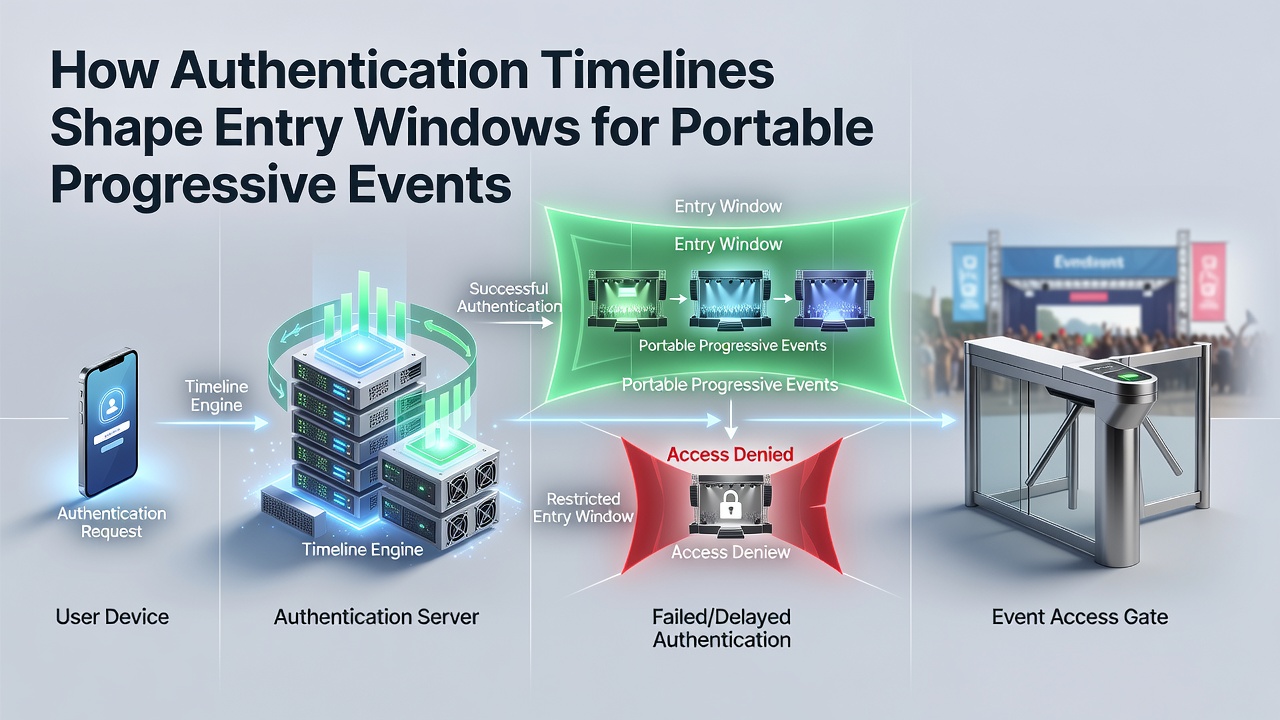
Industry associations such as the Canadian Gaming Association have published summaries showing that standardized biometric templates reduce average verification time by 19 seconds across compliant applications, thereby expanding the functional length of entry windows for participants in portable events. Yet platforms operating under multiple regulatory frameworks must maintain separate verification paths, which can introduce branching logic that lengthens overall sequences when users cross jurisdictional boundaries mid-session.
Technical Factors Affecting Timeline Variability
Network latency, device processing power, and concurrent user loads on authentication servers introduce further fluctuations that compound during high-traffic periods. Data collected in early 2026 demonstrates that peak evening hours correlate with authentication extensions of 25 to 40 seconds on average, particularly when progressive events coincide with major sporting calendars or promotional campaigns. Platform engineers respond by implementing predictive pre-authentication caching for registered devices, which shortens the live verification window once an entry period opens.
Adjustments Observed in June 2026 Operations
During June 2026, several major operators introduced staggered authentication prompts that initiate verification before entry windows formally open, allowing background processing to complete while players remain outside the active period. This approach preserves the full duration of the entry window for actual participation rather than consuming it with login steps. Reports from those implementations show improved entry completion rates, especially for events tied to portable progressive pools where timing directly influences contribution eligibility and subsequent payout calculations.
Conclusion
Authentication timelines function as gatekeepers that either preserve or erode the usable length of entry windows for portable progressive events, and platform adjustments continue to evolve in response to regulatory requirements and technical capabilities. Data gathered through mid-2026 underscores the direct relationship between verification duration and successful participation metrics across multiple markets. Operators that align authentication flows with the temporal constraints of these events maintain higher engagement levels within the defined windows.