Shifting Sands of Reward Eligibility: How Compliance Updates Redefine Access to Exclusive Gaming Perks Worldwide
Harper Koch · Jun 17, 2026
Shifting Sands of Reward Eligibility: How Compliance Updates Redefine Access to Exclusive Gaming Perks Worldwide
Regulatory frameworks across multiple jurisdictions continue to evolve in mid-2026, reshaping the criteria that determine who qualifies for tiered loyalty rewards, VIP lounge access, and time-limited promotional credits in both land-based and digital gaming environments. These adjustments stem from updated anti-money laundering protocols, enhanced know-your-customer mandates, and cross-border data-sharing agreements that operators must now integrate into their player verification systems.
Operators in several markets report that reward eligibility windows have narrowed since earlier compliance revisions took effect, with verification checkpoints occurring at more frequent intervals throughout player sessions. Those checkpoints now incorporate biometric markers alongside traditional identity documents, a shift that directly influences how quickly participants move between reward tiers.
Regional Regulatory Adjustments and Their Direct Effects
North American regulators, including those operating under the Nevada Gaming Control Board, introduced refined reporting thresholds in spring 2026 that require operators to flag accounts showing rapid accumulation of promotional credits. Players who previously qualified for expedited tier advancement now face extended review periods before accessing high-limit tournament invitations or personalized cashback schedules. Similar patterns appear in Canadian provinces where provincial gaming authorities tightened transaction monitoring rules effective June 2026.
European markets outside the United Kingdom implemented parallel measures through the Malta Gaming Authority, which updated its player protection guidelines to require documented proof of sustainable play patterns before granting access to exclusive leaderboard events. The changes have prompted several international platforms to recalibrate their automated reward distribution engines, delaying perk activation until full compliance audits conclude.
Impact on Loyalty Structures and Verification Timelines
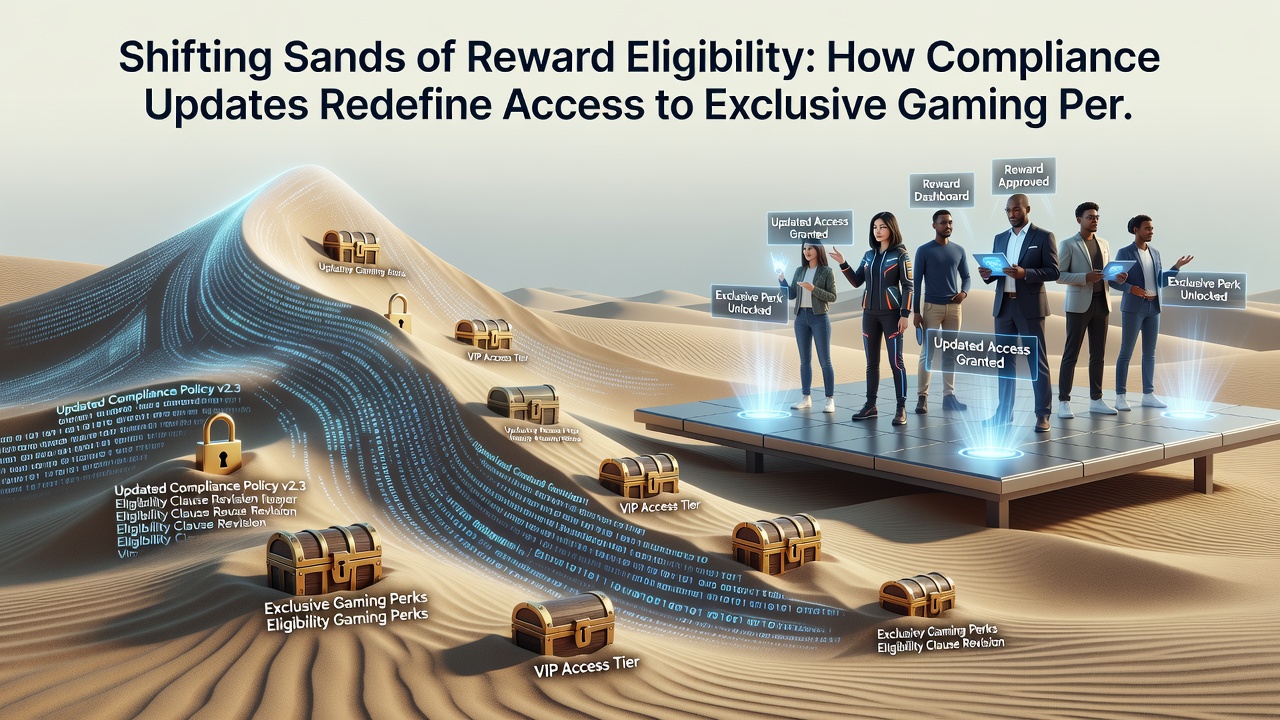
Many loyalty programs now embed mandatory cooling-off confirmations within their progression logic, meaning accumulated points do not automatically convert into redeemable perks without fresh identity validation. Research from industry monitoring groups indicates these added steps extend average approval times by 24 to 72 hours depending on jurisdiction and account history. Operators have responded by deploying real-time dashboards that display pending compliance tasks directly inside player accounts, allowing users to complete required uploads before reward cycles close.
Asia-Pacific jurisdictions have adopted comparable frameworks, with Singapore's Casino Regulatory Authority issuing directives in early June 2026 that link reward tier retention to periodic source-of-funds declarations. Players maintaining status in premium segments must now submit updated financial summaries at quarterly intervals rather than annually, a requirement that has already altered qualification rates for portable competition entries tied to those tiers.
Technology Integration and Operational Adjustments
Platform providers have accelerated deployment of modular compliance layers that interface directly with loyalty engines, enabling operators to pause or resume perk eligibility based on live regulatory feeds. These integrations reduce manual review backlogs while creating audit trails that satisfy multiple overlapping jurisdictions simultaneously. Data from trade associations shows operators utilizing such systems experience fewer account freezes during cross-border play sessions, preserving continuity for players who split activity across regulated markets.
Training programs for customer support teams have expanded accordingly, focusing on explaining new verification sequences without disrupting reward claim processes. Several major operators now route tier-upgrade requests through dedicated compliance portals that pre-screen documentation against jurisdiction-specific checklists before forwarding them for final approval.
Future Trajectories for Global Reward Access
Industry observers anticipate further synchronization of compliance standards through emerging multilateral agreements scheduled for discussion later in 2026. These discussions center on standardized data formats for player activity reports, which could streamline eligibility determinations for travelers participating in reward programs across different regulatory zones. Until those standards finalize, operators continue to maintain separate rule sets per market, resulting in varied perk unlock speeds depending on a player's primary jurisdiction of activity.
Conclusion
Compliance updates continue to recalibrate the pathways through which players access exclusive gaming perks, with verification frequency, documentation requirements, and automated monitoring all playing central roles in determining eligibility timelines. As regulatory bodies refine their approaches through June 2026 and beyond, operators and players alike adapt to systems that prioritize documented compliance alongside traditional play metrics. These developments underscore an industry-wide movement toward greater transparency in how reward structures operate under evolving legal frameworks.