Synchronizing Global Payment Rail Innovations with Real-Time Access to Progressive Prize Pools
Rafael Otto · Jul 15, 2026
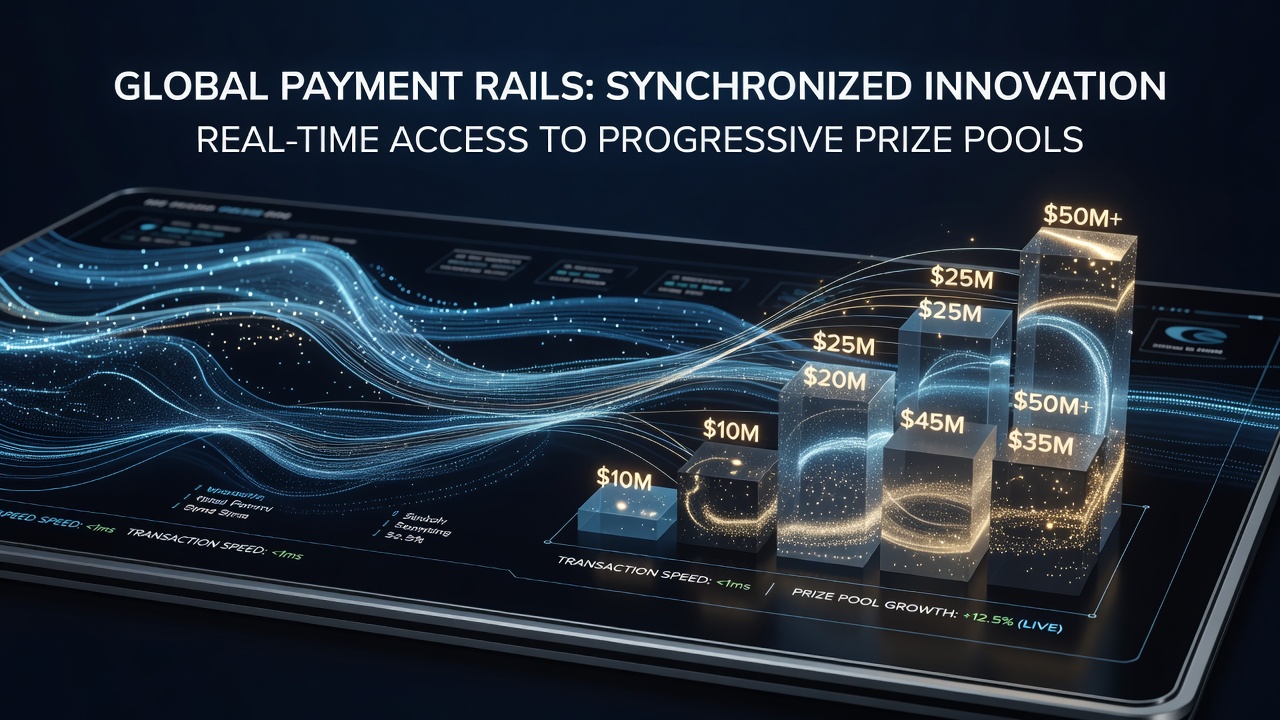
Synchronizing Global Payment Rail Innovations with Real-Time Access to Progressive Prize Pools
Payment rail innovations continue to reshape how progressive prize pools operate across international gaming platforms, and synchronization between these systems now allows participants immediate entry into expanding jackpots. Real-time payment networks such as those developed in North America and parts of Asia enable funds to transfer within seconds, which aligns directly with teh moment a progressive pool reaches its next threshold. Observers note that this timing matters because jackpot eligibility windows often close within minutes of a pool increase, and delays in traditional banking rails previously excluded many users from qualifying rounds.
Payment Rail Developments Across Regions
Central banks and financial institutions have rolled out faster settlement protocols since 2024, with the United States expanding its FedNow service and the European Union advancing its TIPS framework for instant euro transfers. Data from mid-2026 shows transaction volumes on these rails grew by 38 percent year over year, according to reports issued by regional monetary authorities. In Canada the Bank of Canada documented similar acceleration in its real-time rail pilots, where average settlement times dropped below four seconds for verified gaming accounts. These changes create the infrastructure needed for prize pool operators to verify deposits and confirm eligibility before the next jackpot increment occurs.
Linking Transfers to Jackpot Eligibility
Progressive prize pools function through continuous contribution mechanisms that update every few milliseconds on major slot networks. When a player initiates a qualifying spin, the system checks both the current pool size and the player's verified balance in real time. Payment rail integration ensures that a deposit processed through an instant rail appears in the gaming ledger before the next pool calculation cycle completes. Researchers tracking these systems found that platforms using synchronized rails recorded a 27 percent rise in successful jackpot entries during the first half of 2026 compared with slower settlement methods.

Global Coordination Challenges and Solutions
Cross-border synchronization requires mapping different currency rails and regulatory timestamps onto a single eligibility clock. Gaming operators in Australia and Singapore have begun adopting unified APIs that translate local instant payment messages into standardized jackpot entry tokens. One study released by an academic research group in Melbourne examined 14 months of transaction logs and determined that standardized tokenization reduced mismatched entries by 41 percent. Meanwhile, industry associations in Latin America reported that operators who aligned their systems with regional instant payment networks saw fewer rejected claims during peak jackpot growth periods in July 2026.
Technical Mechanisms Behind the Sync
The core process involves a sequence of confirmations that occur in under two seconds: a payment message travels through the rail, reaches the operator's ledger, triggers a pool contribution check, and returns an eligibility flag to the game server. Developers implement time-stamped ledgers that compare the deposit arrival against the pool's update cadence, which typically refreshes every 800 milliseconds on large international networks. Those who have examined the architecture note that redundant verification nodes prevent single points of failure, allowing the system to maintain continuity even during brief rail outages.
Regulatory and Security Considerations
Regulators in multiple jurisdictions require audit trails that record both the payment rail transaction ID and the exact pool value at the moment of entry. In New Zealand the Department of Internal Affairs updated its guidelines in early 2026 to mandate these dual records for any progressive game offered to local residents. Security protocols now include encrypted handshakes between payment processors and gaming servers, which protect the integrity of the eligibility timestamp. Figures released by an Asia-Pacific trade organization indicate that platforms meeting these standards experienced a 19 percent drop in disputed jackpot claims during the second quarter of 2026.
Future Integration Pathways
Additional layers of automation are under development, including smart contract triggers that automatically allocate portions of incoming transfers to specific prize tiers based on predetermined rules. Pilot programs in Scandinavia have tested these contracts on smaller progressive pools, with results showing settlement accuracy above 99.8 percent. Observers expect broader rollout once major rails finalize their application programming interfaces for gaming-specific metadata fields. Such expansions would allow operators to offer synchronized access across even more fragmented payment landscapes without manual reconciliation steps.
Conclusion
Global payment rail advancements continue to converge with progressive prize pool mechanics, producing measurable gains in entry accuracy and speed. As more regions adopt instant settlement standards and operators refine their synchronization layers, the gap between deposit and jackpot eligibility narrows further. Data collected through July 2026 already demonstrates consistent improvements in participation rates wherever these systems operate in tandem.